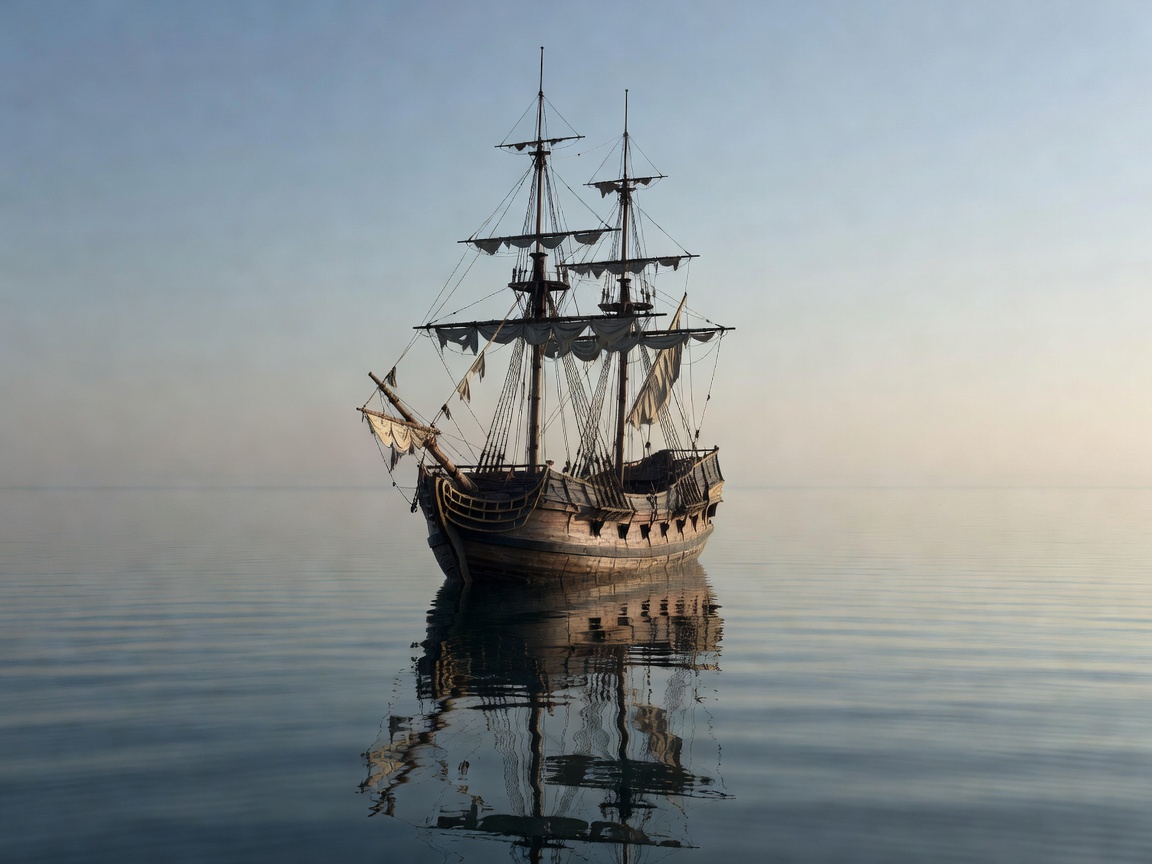
On December 4, 1872, the British merchant brigantine Dei Gratia spotted an American-registered brigantine, the Mary Celeste, drifting under awkward, partial sail roughly 400 nautical miles east of the Azores. Boarding parties found the vessel entirely deserted, seaworthy, with its cargo of industrial alcohol largely intact and ample provisions for six months on board.
The On-Scene Physical Condition
Captain David Morehouse and his first mate Oliver Deveau documented the precise state of the vessel. The findings immediately ruled out common early sensationalist claims regarding half-eaten warm meals or piratical massacres:
- Navigation Equipment: The chronometer and sextant were missing, alongside the ship's register and navigation documents. The logbook remained on the mate's desk, its last entry dated November 25 at 8:00 AM.
- Pumps & Bilge: The sounding rod was found discarded on deck. The bilge held approximately 3.5 feet of water—a manageable volume for a 282-ton ship of that period, not posing imminent sinking danger.
- Lifesaving Craft: The vessel's single yawl boat was absent, having been launched from the stern davits. A trailing rope (towline) was found frayed and attached to the stern.
- Cargo Integrity: The hold contained 1,701 barrels of denatured industrial alcohol. Nine barrels were discovered empty upon later salvage inspection in Gibraltar.
Analysis of Competing Explanations
| Hypothesis | Supporting Observations | Forensic Counter-Points |
|---|---|---|
| Alcohol Vapor Pressure & Flash Fire | Porous red oak barrels; hold hatch covers found blown off or unfastened. | No scorch marks, soot traces, or thermal warping reported by Gibraltar inspectors. |
| Faulty Pump Mechanics & Sea Inundation | Sounding rod on deck suggests crew was constantly checking water levels; pump disassembled. | Ship remained afloat and traversed hundreds of miles unattended without capsizing. |
| Incipient Seaquake / Tsunami Shock | Frequent seismic activity in the Azores basin causing sudden cargo rupture. | No recorded major seismic event in maritime logs of nearby ships on Nov 25, 1872. |
The Forensic Assessment: The Evacuation Dynamic
The prevailing consensus among nautical engineers and historians points to a panic-induced temporary evacuation rather than a deliberate, permanent abandonment or foul play. Captain Benjamin Briggs, known as an experienced, abstemious master, was sailing with his wife Sarah and two-year-old daughter Sophia, alongside a handpicked crew of seven.
A plausible sequence involves noxious alcohol vapour building up in the unventilated hold during warmer latitudes, prompting rumbling sounds or a minor cool blast. Believing an explosion was imminent, Briggs ordered the crew into the yawl boat, tethered to the brigantine via the long towline while airing out the vessel. A sudden squall likely severed the makeshift towline, leaving the small yawl unable to overtake the fully rigged brigantine in heavy seas.
Conclusion
While the exact catalyst for Captain Briggs ordering his family and crew into the open North Atlantic remains unrecorded, the forensic facts contradict supernatural theories. The Mary Celeste endures as history's definitive study in maritime risk assessment and catastrophic split-second command decisions.